# The Ultimate Guide to Cavalry Hats: History, Style, and Craftsmanship

Welcome to the definitive guide on Cavalry Hats, brought to you by **Miller Hats**. Whether you are a history buff, a military reenactor, an active-duty service member keeping tradition alive, or simply someone who appreciates timeless, rugged headwear, this comprehensive deep dive explores everything you need to know about the iconic Cavalry Hat.

---

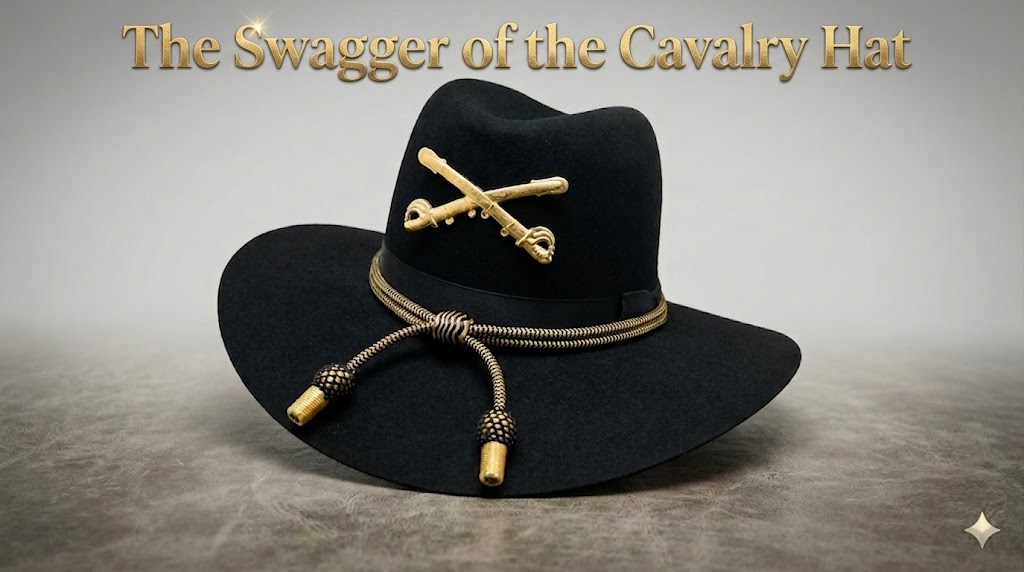
## 1. Introduction: The Swagger of the Cavalry Hat

There is a distinct, undeniable swagger that comes with a Cavalry Hat. It isn’t just a piece of headwear; it’s an attitude, a piece of living history, and a symbol of rugged frontier spirit. When you see someone sporting that iconic crease, the golden acorn cords dangling just so, and the crisp brim, you instantly know they are carrying on a legacy that dates back over a century and a half.

For generations, the Cavalry Hat—often affectionately referred to as the "Stetson" within the military, or simply the "Cav Hat"—has represented the daring, mobile elite of the armed forces. But you don't have to be leading a horseback charge or operating a modern armored cavalry vehicle to appreciate the sheer craftsmanship and style of these legendary hats.

If you are looking for an authentic, premium-quality piece of American heritage, look no further than **Cavalry Hats by Miller Hats**. In this ultimate guide, we’ll take a long, winding ride through the history, distinct styles, and meticulous, old-world craftsmanship that go into making every single Cavalry Hat. Grab a cup of campfire coffee, settle in, and let's talk hats.

---

## 2. A Ride Through History: The Origins of the Cavalry Hat

To understand why the Cavalry Hat holds such a revered place in modern culture, we have to travel back to the mid-19th century, to an era of dusty trails, untamed frontiers, and the birth of the American Western archetype.

### The Civil War and the M1858 Uniform Hat
Before the Cavalry Hat became the streamlined icon we know today, its predecessor was the Model 1858 Uniform Hat, also known as the "Hardee Hat." Named after William J. Hardee, a tactics officer in the U.S. Army, this hat was made of black felt and featured a tall, cylindrical crown and a wide brim. According to regulations, the brim was pinned up on the right side for cavalrymen (to keep it out of the way of their sabers) and on the left side for infantrymen (to avoid interfering with their muskets).

While the Hardee Hat looked sharp on a parade ground, it was notoriously impractical in the field. It was heavy, hot, and lost its shape completely when soaked by rain or sweat. Soldiers quickly began modifying their headwear, seeking out lighter, more durable alternatives.

### John B. Stetson and the "Boss of the Plains"
Enter John B. Stetson. In the 1860s, Stetson journeyed out West and recognized a massive, unfulfilled need among cowboys, gold prospectors, and soldiers alike: a hat that could truly withstand the brutal elements of the American frontier. He created the "Boss of the Plains"—a lightweight, waterproof hat made from blended animal fur felt, featuring a round, open crown and a flat, wide brim to shield the eyes and neck from the scorching sun.

The U.S. Cavalry quickly adopted this style of hat because it was virtually indestructible. A trooper could use his hat to scoop water from a stream for his horse, fan a campfire into life, or shield his face during a blinding dust storm, and the hat would still keep its integrity.

### The Evolution to the Iconic Black Cavalry Hat
By the time the Indian Wars and the Spanish-American War rolled around, the Army had formalised the use of the campaign hat. The color shifted to a dark blue or black felt, and the crowns began to be creased—often with a "Montana Peak" (four pinches) or a classic center dent—to help shed rainwater more efficiently.

Though the military eventually transitioned to helmets and utility caps for modern combat, the Cavalry units fiercely held onto their hats as a symbol of pride, elite status, and historical continuity. Today, the tradition is stronger than ever, worn with immense pride during formal ceremonies, change-of-command events, and by hat enthusiasts worldwide who appreciate the rugged elegance of **Cavalry Hats by Miller Hats**.

---

## 3. Dissecting the Anatomy of a Cavalry Hat

Before we dive into the specific styles and shapes, it’s essential to understand the structural anatomy of a premium Cavalry Hat. When you look at **Cavalry Hats by Miller Hats**, every component serves a historical or functional purpose.

### The Crown
The crown is the top portion of the hat that sits on your head. Historical Cavalry crowns are typically 4 to 5 inches tall. Depending on the specific style or era you are replicating, the crown can be left raw and open (round) or creased into a variety of traditional shapes, such as the Cavalry Crease or the Campaign style.

### The Brim
The brim is the horizontal edge that extends outwards from the base of the crown. For an authentic Cavalry look, the brim is usually between 3 to 3.5 inches wide, perfectly balanced to offer sun protection without being overly cumbersome. The brim can be styled completely flat, slightly dipped in the front and back, or curled at the edges.

### The Sweatband
Hidden away on the inside of the hat, the sweatband is arguably the most crucial element for comfort and fit. High-quality Cavalry Hats utilize premium, genuine sheepskin leather sweatbands. Leather breathes naturally, molds to the unique shape of your skull over time, and prevents sweat from ruining the outer felt.

### The Hat Band and Cavalry Cords
On the outside base of the crown sits the hat band. For standard hats, this might be a simple leather or grosgrain ribbon. However, for an authentic Cavalry Hat, this is where the **Cavalry Cords** come into play. These twisted, decorative cords wrap around the base of the crown and feature two distinct "acorns" that dangle over the front brim.

Historically, the color of these cords designated the wearer's rank or military branch:
* **Solid Gold / Yellow Cords:** General Officers or Cavalry branch.
* **Gold and Black Intertwined Cords:** Field Grade and Company Grade Officers.
* **Solid Silver / Silver and Black Cords:** Warrant Officers.
* **Solid Light Blue, Red, or Yellow Cords:** Enlisted soldiers, with yellow specifically representing the Cavalry.

---

## 4. Cavalry Hats Styles: Finding Your Perfect Crease

Not all Cavalry Hats are created equal. Over the decades, different units, eras, and personal preferences have given rise to several distinct Cavalry Hat styles. When selecting your next masterpiece from the **Cavalry Hats by Miller Hats** collection, you can choose the exact silhouette that speaks to your personal style.

### The Classic Cavalry Crease (The Modern Trooper)
This is the most widely recognized style in the modern era, heavily popularized by movies like *Apocalypse Now* (think Kilgore’s iconic hat) and worn by modern U.S. Army Cavalry regiments.

* **The Shape:** Features a sharp center fire crease down the middle of the crown, with two deep side pinches near the front.
* **The Brim:** The brim is kept relatively flat but features a slight, aggressive swoop or dip in the front and back, giving it a commanding, forward-leaning presence.
* **The Vibe:** Bold, authoritative, and deeply rooted in modern military tradition.

### The Montana Peak (The Campaign Hat)
Also known as the "Drill Sergeant Hat" or the "Smokey Bear," the Montana Peak has deep roots in early 20th-century military history, heavily used during World War I.

* **The Shape:** The crown is pinched symmetrically from four different sides, meeting at a sharp, centered point at the very top. This design was originally engineered to allow torrential rainwater to run off the hat instantly without pooling.
* **The Brim:** The brim is completely flat and rigidly stiffened to prevent sagging, even in high humidity or heavy rain.
* **The Vibe:** Disciplined, historic, and incredibly clean-cut.

### The Raw / Open Crown (The Frontier Custom)
For the purists who want a truly personalized experience, the open crown is the ultimate canvas.

* **The Shape:** The hat is shipped completely round and uncreased, exactly how it comes off the factory molds.
* **The Customization:** This allows the wearer to steam and shape the hat themselves, creating a custom crease that perfectly matches their individual personality or a highly specific historical sub-unit specification.
* **The Vibe:** Authentic, old-school, and completely customizable.

### The Rough Rider Style
Inspired by Theodore Roosevelt and his legendary volunteer cavalry during the Spanish-American War, this style leans heavily into the rugged, practical aesthetic of the turn of the century.

* **The Shape:** A casual, slightly less rigid center crease or pinch.
* **The Brim:** The hallmark of this style is that one side of the brim (usually the left) is pinned or stitched up flat against the side of the crown, mirroring the historical look of troopers who needed their left side clear for rifle shoulders or equipment.
* **The Vibe:** Adventurous, rebellious, and packed with character.

---

## 5. How Premium Cavalry Hats Are Made: The Art of Felt Craftsmanship

To truly appreciate a premium hat, you have to look past the finished product and understand the intense, labor-intensive process required to build it. At Miller Hats, quality isn't an accident—it's the result of time-honored techniques passed down through generations of master hatters.

Let's lift the curtain and look at exactly how a top-tier Cavalry Hat is made from scratch.

### Step 1: Selecting the Raw Material (Fur Felt vs. Wool Felt)
The journey of every great hat begins with the fiber. While cheap novelty hats are made from synthetic materials or low-grade wool, a genuine, investment-quality Cavalry Hat is made from **Fur Felt** (usually a blend of wild hare, rabbit, or premium beaver fur).

Why fur felt? Fur fibers possess microscopic barbs that interlock tightly when exposed to moisture, heat, and pressure. This creates a dense, incredibly durable, naturally water-resistant, and silky-smooth material that holds its shape for decades. The higher the percentage of beaver fur (often designated by an "X" marking, like 5X, 10X, or 100X), the more resilient and luxurious the hat will be.

### Step 2: Coning and Felting
The loose fur fibers are blown into a massive dome-shaped machine called a forming tower. Inside, a large, perforated copper cone spins rapidly while a vacuum sucks the loose fur onto its outer surface, forming a delicate, oversized web of fur that looks like a giant piece of cotton candy, often three times the size of the final hat.

This fragile cone of fur is sprayed with hot water to begin the felting process. The heat and moisture cause the microscopic barbs on the fur to shrink and lock together. The cone is then wrapped in cloths and passed through a series of rollers (a process known as multi-rolling or shrinking), which gradually reduces its size while drastically increasing its strength and density.

### Step 3: Blocking the Crown and Brim
Once the felt has reached the perfect density, it’s time to give it the basic shape of a hat. This is called **blocking**. The felt cone is softened with live steam and pulled tightly over a wooden or metal crown block that dictates the head size and crown shape.

Simultaneously, the outer flange of the felt is pulled flat and clamped down to form the brim. The hat is then dried thoroughly, locking the fibers into this fundamental shape.

### Step 4: Dyeing and Sanding (The Finish)
If the hat wasn't dyed at the fiber stage, the blocked hat body is submerged in rich, deep dye vats to achieve that iconic, uniform midnight black or cavalry brown color.

After dyeing and drying, the hat feels rough to the touch. Master craftspeople use progressively finer grits of sandpaper, spinning the hat rapidly on a lathe, to buff away the rough outer fibers. This process, called "pouncing," gives the felt its signature, velvety-soft "nap" or finish.

### Step 5: Stiffening and Shaping
To ensure a Cavalry Hat maintains its crisp, authoritative lines even when exposed to wind and weather, a natural stiffening agent called shellac is meticulously applied to the felt.

Once the stiffener sets, the hat goes through the final shaping process. Using specialized steam tables and precise hand-creasing techniques, the crown is creased (into a Cavalry Crease, Montana Peak, etc.), and the brim is cut to the exact specified width and given its signature front-and-back dip.

### Step 6: Trimming and Detailing
The final stage is where the hat gets its soul. Highly skilled sewers sew the genuine leather sweatband into the interior of the hat. This requires immense precision; a single millimeter off can ruin the fit and comfort of the hat.

Next, the interior silk lining is installed to protect the crown from hair oils, and the exterior trim—including the grosgrain ribbon band, the wind cord, and the iconic Cavalry acorns—is meticulously fitted by hand. After a rigorous final quality control inspection, a masterpiece is born: a genuine **Cavalry Hat by Miller Hats**, ready to be worn with pride.

---

## 7. How to Measure Your Head for a Flawless Fit

Because a premium Cavalry Hat features a stiffened brim and a structured leather sweatband, getting the exact correct measurement is absolutely critical. A hat that is too tight will give you a headache within an hour, while a hat that is too loose will shift around on your brow or blow off with a stiff breeze.

Follow these simple steps to find your perfect size before ordering your **Cavalry Hats by Miller Hats**:

1.  **Get the Right Tool:** Use a flexible cloth measuring tape (the kind used by tailors). If you don't have one, wrap a piece of non-stretchy string around your head and measure the string afterward with a standard ruler.
2.  **Position the Tape:** Wrap the tape around your head, positioning it approximately **1/8 inch to 1/2 inch above your ears** and directly across the middle of your forehead (where a hat would naturally sit).
3.  **Keep it Level:** Ensure the measuring tape is completely level all the way around your head. Don't pull it too tight—keep it comfortably snug, exactly how you want your hat to feel.
4.  **Read the Measurement:** Take the measurement to the nearest **1/8th of an inch** or **centimeter**.
5.  **Consult the Size Chart:** Compare your measurement against the official Miller Hats sizing chart to determine if you are a Small, Medium, Large, XL, or a specific numeric size (e.g., 7 3/8). If you fall directly between two sizes, it is always recommended to order the larger size; you can easily use foam hat reducers to create a snug, perfect fit.

---

## 8. Caring for Your Cavalry Hat: Preserving a Legacy

A premium fur felt Cavalry Hat isn’t a disposable accessory; it’s an heirloom piece that, with proper care, can easily outlive its owner. To make sure your hat remains crisp, clean, and commanding for decades to come, follow these essential maintenance tips:

### Proper Storage Is Key
Never rest your Cavalry Hat on its brim on a flat surface. Over time, gravity will cause the weight of the crown to flatten out the signature front-and-back dip of the brim. Instead, always store your hat **upside down on its crown**, or place it on a dedicated hat peg or a contoured hat stand that supports the crown without putting pressure on the brim.

### Brushing Away the Dust
Felt naturally attracts dust, lint, and loose hair over time. Invest in a high-quality, soft-bristled **hat brush** (typically made from horsehair). Always brush your hat in a **counter-clockwise direction** when looking at the crown from the top. This follows the natural direction the fibers were laid down during the manufacturing process and prevents the felt from looking frayed or fuzzy.

### Handling Rain and Moisture
A premium fur felt hat is inherently water-resistant and can easily handle a heavy rain shower. However, if your hat gets thoroughly soaked, **never dry it using artificial heat** (such as a hair dryer, a radiator, or leaving it in a hot car). Artificial heat will shrink the leather sweatband and warp the felt fibers beyond repair. Instead, flip the leather sweatband out, place the hat upside down on its crown in a cool, well-ventilated room, and let it air-dry naturally.

### Handle by the Brim, Not the Crown
It can be incredibly tempting to grab your hat by pinching the front of the crown when taking it on or off. Avoid this habit! Constantly pinching the crown will breakdown the stiffener, ruin the crisp crease, and transfer oils from your fingers onto the felt, leading to premature wear and staining. Always handle your hat by the brim with clean hands.

---

## 9. Conclusion: Stand Out from the Crowd

In a modern world dominated by mass-produced, disposable fashion and generic baseball caps, choosing to wear a Cavalry Hat is a powerful statement. It shows that you value craftsmanship, respect history, and aren't afraid to stand out from the crowd with a look that commands respect.

When you invest in **Cavalry Hats by Miller Hats**, you aren’t just purchasing headwear. You are investing in centuries of American frontier heritage, meticulous handcrafted artistry, and a timeless style that never goes out of fashion. From the historical battlefields of the 19th century to the modern blacktop, the Cavalry Hat remains an enduring symbol of courage, leadership, and unyielding swagger.

Are you ready to find your perfect crease? Head over to **Miller Hats** today, explore our legendary collection of premium Cavalry Hats, and carry on the proud tradition of the Cavalry with style.

0 Comments