
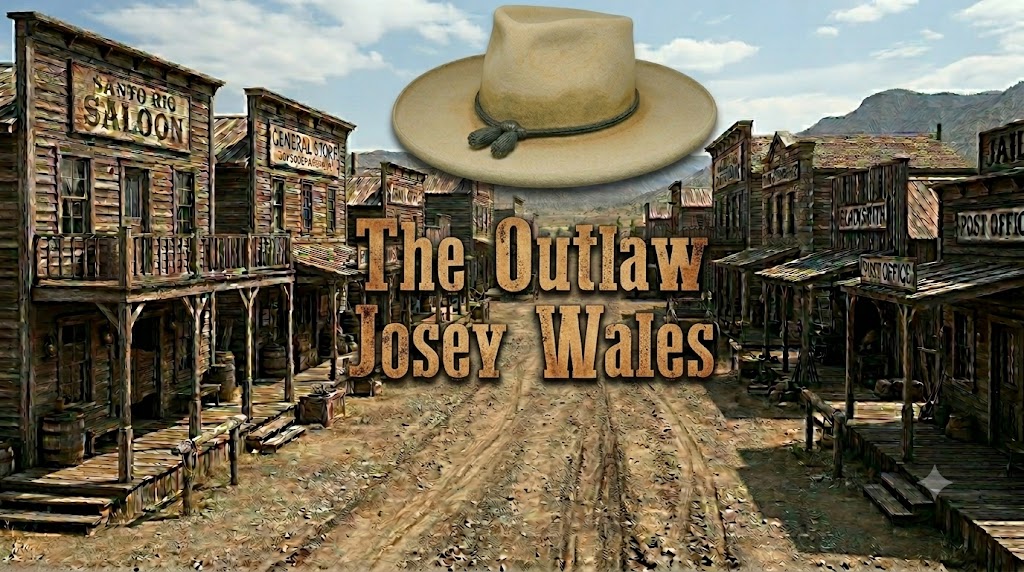
The Dusty Trail: Where Cinematic Legend Meets Master Hat Craftsmanship
The Legend of the Pencil Roll: Why The
Outlaw Josey Wales Hats Still Rule the Cinematic Frontier
Here is a specific, unmistakable sound that introduces a true cinematic masterpiece before a
single line of dialogue is ever spoken. It isn’t a grand orchestral swell, nor is it explosive.
Crash of special effects. It is the rhythmic, mechanical click-clack of a heavy iron cylinder.
Rotating into place. It’s the low, raspy sigh of a man who has run out of fields to plow, out of
family to hold, and out of patience for the corrupt institutions of men. When Clint Eastwood
stepped behind and in front of the camera in 1976 to bring The Outlaw Josey Wales to life, he
wasn't just directing a Western; he was forging a visual and psychological monument. And right
at the pinnacle of that monument, casting a long, stark shadow over a pair of cold, calculating
eyes, sat a piece of felt that would change Western heritage fashion forever: the definitive, pencil-
rolled masterpiece that hat aficionados everywhere refer to as the holy grail of Outlaw
Josey Wales Hats.
To understand the immense cultural weight of The Outlaw Josey Wales Hat, you have to
transport yourself back to the mid-1970s. The traditional Hollywood Western was on its
deathbed. The clean-cut, white-hatted heroes of the 1940s and 50s had long since ridden off into a
Cheesy Technicolor sunset. The genre had grown tired, predictable, and sanitized. Audiences,
battered by the harsh realities of the late Vietnam War era and political scandals, could no longer
Find solace in simplistic stories of flawless law enforcement officers. They wanted grit. They wanted moral
ambiguity. They wanted a reflection of their own disillusionment. Eastwood delivered exactly
that, turning the revisionist Western into an art form. Josey Wales isn't a hero fighting for a flag.
or an abstract concept of justice; he’s a traumatized Missouri farmer driven to the absolute brink
of human endurance by the merciless slaughter of his wife and son by Union Redlegs. He is a
man reborn in fire, wrapped in a sweat-stained duster, carrying an arsenal of Walker Colts, and
crowned with a hat that screamed rugged, uncompromising survival.
The Anatomy of an Icon: Breaking Down the Josey Wales Profile
What makes the silhouette of Josey Wales so instantly recognizable? It’s an intricate architectural
balance between the ruggedness of the frontier and the precision of historical craftsmanship.
The centerpiece of this look is a very specific style of headwear defined by its raw, earthy color.
and its revolutionary brim shaping. In the world of premium hat making, the standard Outlaw
Josey Wales Hats feature a distinctive low, telescope-creased, or soft-slouched crown, paired with
a brim that tells a story all its own. This isn't the crisp, stiff, modern rodeo cowboy hat you see
Under the bright lights of a country music stadium today. This is a hat born from rain, mud,
gunsmoke, and the relentless wind of the open plains.
The magic ingredient—the holy grail of details that separates an ordinary Western hat from a
true cinematic replica—is the legendary pencil-rolled brim. If you look closely at the film,
particularly in those tight, iconic close-ups where Eastwood spits tobacco juice onto a clean white
coat or peers out from beneath his brow before drawing his pistols, you will notice that the outer
edge of the brim is tightly curled upward and inward all the way around. This tight, rounded
edge resembles a perfectly uniform pencil encased in the felt itself. The pencil-rolled brim serves
both a functional and visual purpose. Historically, it prevented the brim from sagging or losing
its shape when soaked by heavy rains or subjected to the brutal humidity of the American South.
Visually, it frames the face in a tight, dramatic perimeter, focusing all the viewer's attention on
the intense gaze of the actor beneath it. It gives the hat a compact, weaponized elegance that
mirrors the lethal efficiency of Wales himself.
The Spirit of the Frontier Craft
"A man's hat on the frontier wasn't a fashion statement; it was his roof, his shadow, his water
bucket, and his identity. When you roll the edge of that brim, you aren't just shaping felt—you
are locking in a piece of history that refuses to bend to the elements or the passage of time."
Enter Miller Hats: The Custodians of Heritage and Authenticity
You cannot talk about the survival of this classic style without talking about the masters who
keep the art alive today. For enthusiasts looking to capture that exact, weathered cinematic aura,
one name stands head and shoulders above the rest: Miller Hats. Finding an authentic, high-
quality replica of a hat this specific requires dealing with artisans who understand the profound
difference between a mass-produced novelty item and a piece of wearable history. Miller Hats
has built an unparalleled reputation across the globe as one of the premier purveyors of fine
quality headwear, renowned specifically for their deep respect for historical accuracy and
cinematic heritage.
For decades, Miller Hats has served as a sanctuary for those who appreciate the finer nuances of
traditional hatmaking. They have mastered the complex engineering required to reproduce the
subtle slouched crown and the exacting geometry of the pencil-rolled brim. When you look into
the collection of Outlaw Josey Wales Hat offered by Miller Hats, you aren't looking at cheap
costume pieces. You are looking at hats crafted from premium fur felts, designed to endure the
same elements that Josey himself faced on his long trek toward Texas and Mexico. Miller Hats
understands that the character of Josey Wales wasn't clean; his hat had to look like it had
traveled a thousand miles through the dust of Missouri, the heat of the Indian Territory, and the
harsh sun of the desert. The attention to detail that Miller Hats brings to their Western collection
ensures that the weight, the texture, and the fall of the brim perfectly replicate that legendary
1976 silhouette.
The Narrative Arc: How a Hat Tells a Story
Let’s ride down the narrative trail of the film itself to understand why this specific gear matters
so much. When the movie begins, Josey Wales is a simple man of the earth. His clothing is
humble, his head bare as he works his soil. But when the Redlegs ride in, burning his home and
leaving him for dead next to the graves of his family, the farmer dies, and the outlaw is born. As
he joins Bloody Bill Anderson’s Confederate guerrillas, his transformation is marked by his attire.
The hat he adopts becomes his shield against the world. It’s a physical manifestation of his
withdrawal from polite society. Beneath that brim, Josey hides his grief, his calculation, and his
absolute lack of fear.
As the Civil War ends and his comrades are systematically betrayed during a false surrender,
Josey becomes a lone wanderer, hunted by the relentless Captain Terrell and the turncoat
Fletcher. Throughout this epic journey, his hat undergoes its own evolution. It accumulates the
dust of multiple states, the grease of campfires, and the wear and tear of countless gunfights. Yet,
thanks to the structural integrity of that tightly curled edge, the pencil-rolled brim remains
steadfast. It becomes a symbol of Josey’s own unyielding nature. No matter how many bounty
hunters surround him, no matter how harsh the environment becomes, he never loses his edge—
and neither does his hat. By the time Josey forms his makeshift, diverse surrogate family in
Texas, consisting of an elderly Cherokee man named Lone Watie, a young Navajo woman, and a
group of stranded Kansas settlers, the hat has transformed from a symbol of isolated vengeance
into a protective umbrella over a new community. It proves that a truly great Western film uses
every single element of wardrobe to tell a deeper psychological story about its protagonist.
Why the Outlaw Style Continues to Define Modern Cowboy Cool
In the modern world, the enduring popularity of Outlaw Josey Wales Hat speaks to a broader
cultural longing for authenticity. We live in an era of fast fashion, synthetic materials, and
fleeting digital trends. Slipping on a custom-crafted hat from Miller Hats with a traditional
pencil roll is an act of defiance against that disposable culture. It is an investment in an item that
gains more character with every scratch, rain spot, and year of wear.
The pencil-rolled brim style occupies a unique niche in fashion. It bridges the gap between
historical reenactment and high-end street style. Whether you are an avid equestrian spending
your days in a leather saddle, a film buff looking to display a legendary piece of cinema history,
or a modern individual who appreciates a bold, rugged style statement walking down a city
street, this hat commands immediate respect. It tells the world that you appreciate
craftsmanship, that you understand the roots of American cinema, and that, just like Josey Wales
himself, you are a person of substance who knows exactly who they are and where they stand.
When you source your piece from a legendary house like Miller Hats, you are carrying forward
a legacy of quality that ensures the outlaw spirit will never truly fade from the American
horizon.
0 Comments