

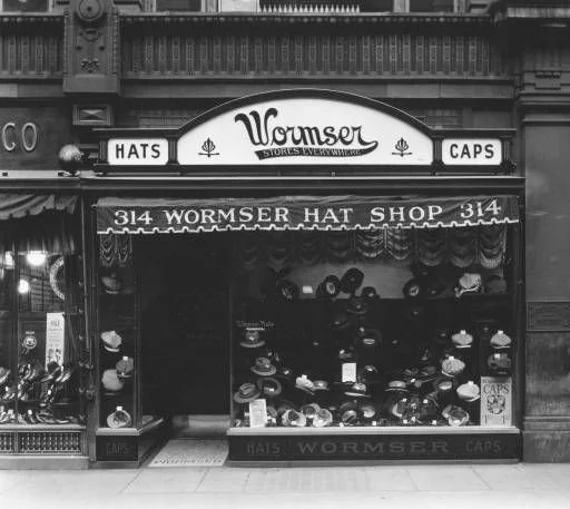
There was a time in America when a man didn’t step out the front door without a hat. Not for Sunday church, not for a train ride, and certainly not for business. A hat wasn’t an accessory. It was the final word in a man’s presentation.
In that era, names mattered. Craftsmanship mattered. And among the most respected names in men’s hats, one stood tall and steady like an old oak in a courthouse square: Wormser.
This is the story of Wormser Hat Stores, a once-prominent name in American hat making and retailing, and how its legacy still whispers through the felt and brim of modern men’s hats today.
The Rise of Wormser: Built on Craft and Character
The Wormser story begins in the late 19th century, when hat making was still closer to an art form than an industry. Founded in Chicago in 1894, the Wormser Hat Company quickly earned a reputation for producing high-quality felt hats that balanced durability with refined style.
Unlike mass-market producers that would later flood the market, Wormser leaned into something older, something steadier. They built their name on:
- Carefully selected fur felt materials
- Time-honored blocking techniques
- Attention to crown shape and brim proportion
- A keen understanding of men’s evolving fashion
By the early 1900s, Wormser had grown into a respected brand with retail stores and distribution across the United States. Their hats weren’t cheap, but they weren’t meant to be. A Wormser hat was an investment, much like a well-made saddle or a good pair of boots.
And men noticed.
Inside a Wormser Hat Store
Step through the door of a Wormser Hat Store in its prime, and you’d find yourself in a place that felt part tailor shop, part gentleman’s club.
There was a rhythm to it:
A bell over the door.
The scent of felt and polished wood.
Rows of hats stacked with quiet precision.
A clerk, often in a crisp shirt and vest, would greet you not with a sales pitch, but with a question:
“What size are you, sir?”
And if you didn’t know, they’d measure you on the spot. Not hurried, not distracted. Just steady hands and practiced eyes.
Trying on a hat wasn’t a transaction. It was a fitting.
They’d guide you through crown heights, brim widths, and styles suited to your face. A man might stand before a mirror, turning slightly, tipping the brim just so, until the hat didn’t just fit his head, but his character.
That was the Wormser difference. They didn’t just sell men’s hats. They helped men find their look.
Styles That Defined a Generation
Wormser’s lineup reflected the golden age of American hat style. Each design had its place, its purpose, and its personality.
The Fedora
The undisputed king of men’s hats. Wormser fedoras featured clean lines, balanced brims, and a versatility that worked from boardroom to backstreet diner.
The Homburg
A step up in formality. With its curled brim and structured crown, the Homburg was favored by businessmen and politicians alike.
The Trilby
A narrower brim and a slightly rakish tilt. Perfect for a man who liked a bit of flair without shouting about it.
Seasonal Variations
- Lightweight straw hats for summer
- Heavier felt for fall and winter
- Water-resistant finishes for foul weather
Wormser didn’t chase trends. They refined them.
Why Wormser Stood Apart in Men’s Hats
There were plenty of hat makers in those days. Some bigger. Some flashier. But Wormser carved out its place by focusing on what mattered most.
1. Quality Materials
Wormser hats often used fur felt blends that provided durability without sacrificing comfort. These hats could take weather, travel, and time.
2. Craftsmanship
Each hat went through a shaping process that required skill and patience. The crown wasn’t just formed. It was sculpted.
3. Fit and Finish
From the leather sweatband to the silk lining, every detail was considered. A Wormser hat felt right the moment it settled onto your head.
4. Consistency
Perhaps most important of all, Wormser delivered reliability. A man who bought one hat often came back for another.
The Cultural Peak of Men’s Hats
To understand Wormser, you have to understand the time it thrived in.
From the early 1900s through the 1950s, men’s hats were as common as shoes. Leaving the house bareheaded was almost unthinkable.
Hats served practical purposes:
- Protection from sun and rain
- Warmth in colder climates
- A finishing touch to formal attire
But they also carried meaning. A man’s hat could signal:
- His profession
- His social standing
- His personal style
Wormser sat comfortably in that world, providing hats that spoke quietly but clearly.
The Decline: When Hats Fell Out of Favor
Then, almost as quickly as it rose, the era of everyday hat wearing began to fade.
By the 1960s, cultural shifts swept across America:
- Cars replaced walking and public transit
- Hairstyles became a form of self-expression
- Dress codes relaxed
The once-essential hat became optional. Then uncommon.
Even well-established names like Wormser felt the change. Retail stores closed. Production slowed. The brand gradually slipped from the spotlight.
But here’s the thing about well-made objects.
They don’t disappear.
They wait.
The Revival of Men’s Hats in the Modern Era
Today, men’s hats are making a quiet comeback.
Not in the rigid, everyone-wears-one way of the past. But in a more personal, intentional way.
You’ll see it:
- A well-shaped fedora paired with denim and boots
- A straw hat on a summer evening in Santa Fe
- A felt hat worn not out of obligation, but choice
Collectors and enthusiasts have also rediscovered vintage brands like Wormser. Old hats, if well cared for, still hold their shape, their feel, and their story.
There’s something satisfying about that.
Like pulling an old fly rod from the rack and finding it still casts true.
Collecting Wormser Hats Today
For those who appreciate history you can hold in your hands, Wormser hats offer a rewarding path into collecting.
What to Look For
- Original interior labels or stamps
- Intact sweatbands and linings
- Minimal moth damage
- Clean, well-shaped crowns
Where to Find Them
- Estate sales
- Vintage clothing shops
- Online auctions
Restoration Tips
A little steam, a gentle brush, and proper storage can bring an old hat back to life. Much like restoring an old saddle or tuning a classic outboard, the work is part of the pleasure.
Lessons from Wormser for Today’s Hat Wearer
Wormser’s story isn’t just about hats. It’s about how things used to be made, and how they were meant to be worn.
If there’s a lesson in it, it might be this:
A good hat doesn’t try to change who you are.
It settles in and becomes part of you.
In a world that moves fast and forgets faster, there’s value in something built to last. Something shaped by hand. Something that carries a bit of history every time you put it on.
Final Thoughts: The Enduring Appeal of Men’s Hats
The old Wormser Hat Stores may no longer line the streets, but their spirit hasn’t vanished.
It lives on in:
- The curve of a well-made brim
- The feel of quality felt under your fingers
- The quiet confidence of a man who knows what suits him
Men’s hats have traveled a long road, from everyday necessity to personal statement. And along that road, Wormser left a mark that hasn’t quite worn away.
Like a good trail through familiar country, it’s still there if you know where to look.
And if you happen to come across a Wormser hat, tucked away in a shop or resting on a shelf, take a moment.
Pick it up. Turn it in your hands.
You’re not just holding a hat.
You’re holding a piece of American craftsmanship that still knows how to tip its brim to the past.
0 Comments